
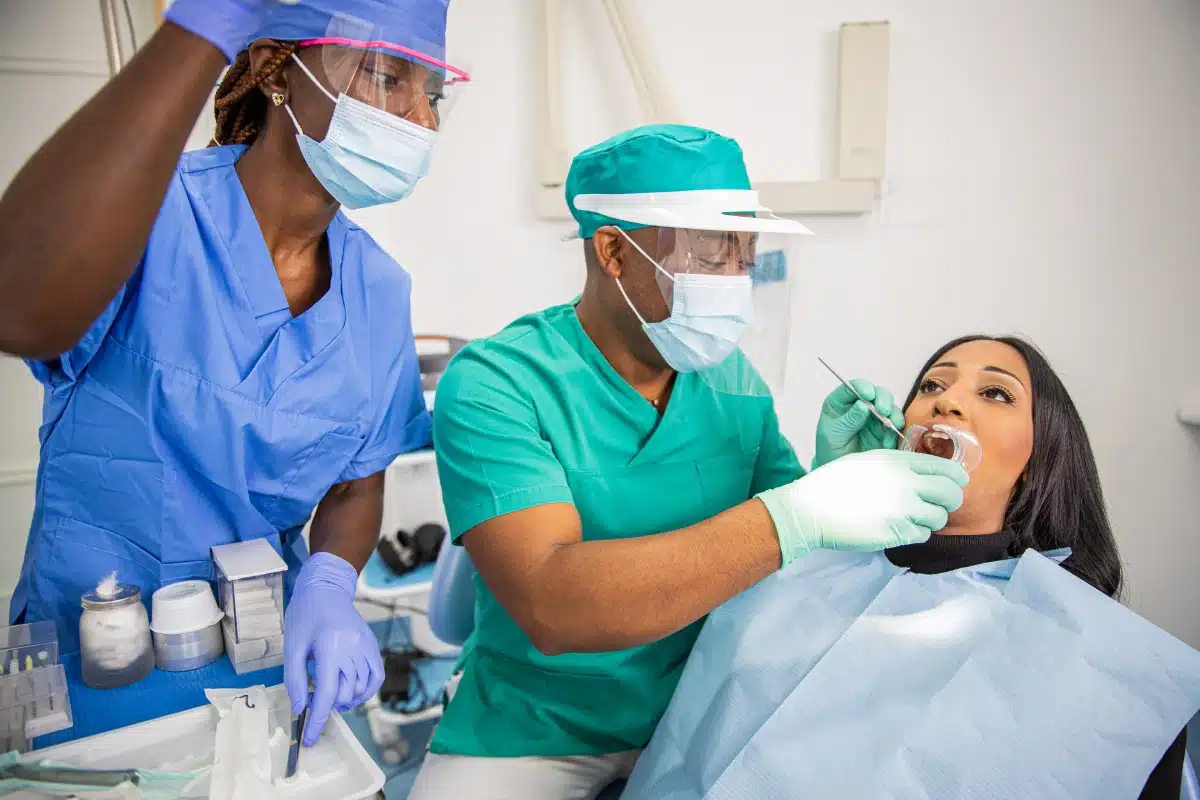
Healing does not happen all at once. Your gums may feel better within a few days, but the deeper tissues need more time to settle and respond. For many people, the most noticeable discomfort improves within several days, while gum healing and changes in pocket depth continue over the following weeks.
What Can You Expect During Recovery?
The first few days are usually when your gums feel the most tender. You may notice mild bleeding, swelling, soreness, or sensitivity to hot and cold. These effects are generally temporary and should gradually improve rather than become more intense.
By the end of the first week, many people feel considerably more comfortable. Your gums may also look slightly different as inflammation goes down. Areas that previously appeared swollen can seem lower or more exposed as the tissue becomes healthier.
Over the next several weeks, the gums continue tightening around the teeth. This is one reason your dental team may wait several weeks before checking pocket depths and deciding how well the tissues have responded.
What Can Affect Healing Time?
Not everyone heals at the same pace. Your recovery can depend on the severity of gum disease, how much inflammation was present, the extent of cleaning required, and how consistently you follow your home care instructions.
Your daily routine matters, too. Gentle brushing, cleaning between your teeth, and following any instructions from your dental team can help control the bacteria that may interfere with healthy gum tissue. Tobacco use can also make healing more difficult.
If you are unsure about caring for your gums during recovery, a qualified dental care team can help you understand which cleaning techniques and products fit your situation.
When Should You Notice Improvement?
A simple way to think about recovery is:
First few days: Tenderness, minor bleeding, and sensitivity may occur.
First week: Discomfort should gradually decrease, while swollen gum tissue begins settling.
Several weeks: The gums continue to heal and become firmer around the teeth.
Follow up visit: Your dental professional can examine the gums and measure pocket depths to determine whether healing is progressing as expected.
There is no single healing timeline that applies to everyone. An oral health specialist may recommend additional care if certain areas remain inflamed or if deeper pockets do not improve enough.
How Can You Support Better Healing?
Keep your mouth clean, but be gentle with tender areas. Continue brushing as directed and clean between your teeth according to your dental team’s instructions. Choose foods that feel comfortable if your gums are sore, and avoid anything that irritates the treated areas.
Most importantly, do not skip your follow up appointment. Healing needs to be evaluated rather than judged only by whether your gums feel better. Ongoing periodontal maintenance care can help your dental team monitor your gums and maintain the progress made during treatment.
When Should You Contact Your Dental Office?
Mild soreness and sensitivity can be expected, but contact your dental office if pain becomes severe, swelling increases significantly, or bleeding does not stop. These symptoms deserve professional evaluation rather than being treated as a normal part of recovery.
Give Your Gums the Time and Care They Need
If you are recovering from gum care or have concerns about lingering symptoms, Prosper Smile Studio can help you understand what your recovery should look like. Schedule an appointment to discuss your concerns and receive personalized guidance. You can also find Prosper Smile Studio in Prosper when you are ready to visit.
Frequently Asked Questions
1. How long does gum soreness last after treatment?
Mild soreness commonly improves within a few days, although sensitivity can last longer depending on the individual.
2. Can gums heal completely after periodontal treatment?
Gums can respond significantly when inflammation is controlled and good home care continues. Your dental professional can assess how well the tissues have recovered.
3. Is bleeding normal during recovery?
Some minor bleeding can occur after treatment, particularly when the gums were inflamed. Persistent or heavy bleeding should be evaluated.
4. Why do my teeth feel more sensitive afterward?
Removing buildup and reducing gum inflammation can expose more of the natural root surface, which may temporarily increase sensitivity.
5. When should I have a follow up visit?
The timing depends on your condition and treatment. Many patients have their gums reassessed several weeks afterward so healing and pocket depths can be evaluated.